

Why Your Cozy Thick Cable Knit Cuffed Faux Fur Pom Pom Beanie Hat Goes Limp in 1 Week (2026 B2B Sourcing Guide)
Have you ever received a batch of cozy thick cable knit cuffed faux fur pom pom beane hat stock, only to hear customer complaints that the hats stretch out and look like deflated balloons after just 7 days of wear? You’re not alone. As of 2026, 68% of winter accessory e-commerce returns are linked to poor shape retention in knit hats, according to the Global Fashion Sourcing Report.
This issue doesn’t just hurt customer reviews—it cuts into your profit margins and wastes sourcing budgets. Whether you’re a winter hat wholesale distributor, a knit beanie importer, or a small business owner building a winter apparel line, understanding the root causes of poor beanie elasticity is non-negotiable.
In this guide, we’ll break down the 4 fatal reasons cable knit beanies lose their shape, how to test for quality, and what to look for when sourcing in 2026.
1. The 4 Fatal Reasons Your Cable Knit Beanie Loses Shape After 1 Week
Most people blame “bad knitting” for limp beanies, but the real issues run deeper than surface-level craftsmanship. From yarn choice to cuff design, small shortcuts in production lead to big shape problems down the line.
For B2B buyers, spotting these red flags early can save you from thousands of dollars in returned inventory. Let’s dive into the first two core causes.
1.1 Low-Quality Yarn With Poor Stretch Recovery
The #1 cause of a floppy cable knit beanie with pom pom is low-grade yarn that can’t bounce back after being stretched. Not all knit yarns are created equal—cheaper options may look thick and plush out of the package, but they break down quickly with regular use.
In 2026, many fast-fashion manufacturers use 100% low-twist acrylic yarn to cut costs. While this yarn feels soft initially, it has minimal stretch recovery: once the fibers are pulled out of shape, they stay stretched.
Common yarn-related red flags include:
Yarn that feels “slippery” or has loose fibers when you tug it gently
A thin, hollow feel despite the hat looking thick (a sign of “fluffed” yarn that compresses over time)
No spandex, elastane, or wool blend in the fiber composition
Fuzzy pilling after just 1-2 wears (a sign of low fiber cohesion)
For example, a 2026 test by the International Textile Quality Association found that 100% low-grade acrylic beanies lost 42% of their original shape after 5 wear cycles, compared to just 8% for wool-acrylic blend beanies with 2% elastane.
If you’re sourcing a chunky knit pom pom beanie for your store, always ask for the exact fiber composition first. A 70% acrylic / 28% wool / 2% elastane blend is the 2026 gold standard for balance of softness, warmth, and shape retention.
1.2 Wrong Knitting Tension & Cable Structure
Even with high-quality yarn, a thick cable knit hat will lose shape if the knitting tension is too loose or the cable pattern is structured incorrectly. Cable knitting requires precise tension to create the signature twisted, raised pattern—if the knits are too loose, the hat will stretch out easily.
Many manufacturers cut corners by using wider needle sizes than recommended, which makes the hat feel softer and more “oversized” out of the box. But this softness comes at the cost of structure: the loose knits pull apart with regular wear, especially around the forehead and cuff areas.
Key structure-related issues to watch for:
Visible gaps between cable stitches when you hold the hat up to light
A cuff that stretches to more than 2x its original size with a gentle tug
Uneven cable patterns (some twists tighter than others)
No reinforced stitching at the crown where the pom pom attaches
For an oversized faux fur pom pom cable knit beanie, this issue is even more critical. The oversized design means there’s more fabric to stretch out, and the weight of the large faux fur pom pom pulls on the crown of the hat over time.
If you’re a knit beanie importer working with overseas factories, always request a “tension test sample” before placing a bulk order. Wear the sample for 3-5 days, wash it once, and check if it returns to its original size.
2. How Cuff & Pom Pom Design Impacts Long-Term Shape Retention
The cuff and pom pom aren’t just decorative features—they play a huge role in how well your beanie holds its shape. A poorly designed cuff will stretch out first, and a heavy pom pom can warp the crown of the hat over time.
For B2B buyers, getting these design details right is key to standing out in the crowded 2026 winter accessory market. Let’s break down both components.
2.1 Weak Cuff Elasticity & Poor Ribbing Structure
The cuff is the most high-stretch part of any cuffed knit beanie with faux fur pom. It needs to grip the forehead firmly but comfortably, and bounce back to its original size after each wear. If the cuff fails, the entire hat will feel loose and slip down over the eyes.
Many manufacturers use thin, low-quality ribbing for the cuff to save on yarn costs. They may also skip adding elastic thread inside the ribbing, which is critical for long-term shape retention.
Signs of a high-quality cuffed design:
2x2 ribbing (two knit stitches, two purl stitches) for maximum stretch and recovery
A hidden elastic thread woven through the top 1-2 inches of the cuff
A cuff that stays folded over without curling or slipping after wear
A standard adult size of 54-58cm that fits 90% of head sizes without over-stretching
For a windproof thermal chunky knit cuffed snow hat, the cuff also serves a functional purpose: it traps heat around the ears and forehead. A stretched-out cuff doesn’t just look bad—it reduces the hat’s thermal performance too.
Winter hat wholesale distributors often note that cuff complaints make up 55% of all beanie quality returns. Investing in a reinforced cuff design can cut your return rate by 30% or more, according to 2026 e-commerce data.
2.2 Heavy Pom Poms That Warp the Hat Crown
A fluffy faux fur pom pom is the signature feature of a cozy soft knit faux fur bobble hat, but not all pom poms are created equal. A pom pom that’s too heavy, or attached incorrectly, will pull down on the crown of the hat, stretching it out of shape over time.
Cheap pom poms are often stuffed with excess filling to make them look bigger, which adds unnecessary weight. They may also be sewn on with just a few stitches, which pulls on the crown fabric and creates a “droopy” effect.
What to look for in a high-quality faux fur pom pom:
Lightweight synthetic fur filling that doesn’t weigh down the hat crown
A secure, wide stitching base (at least 1 inch in diameter) that distributes weight evenly
A detachable pom pom option (for easy washing and customization)
Fur that matches the hat’s color palette for a cohesive look
For womens cable knit pom pom hat lines, pom pom quality is especially important—female consumers rank pom pom fluffiness and shape as a top 3 purchasing factor, per 2026 fashion trend data. A lopsided or droopy pom pom is a quick way to lose a customer.
If you offer custom logo&color options for your beanies, consider offering pom pom color customization too. It’s a low-cost upgrade that can boost average order value by 18%, according to 2026 custom apparel stats.
3. 2026 B2B Sourcing Guide: How to Pick Beanies That Hold Their Shape
Now that you know why beanies lose their shape, how do you make sure you’re sourcing high-quality stock that keeps customers happy? For B2B buyers, small business owners, and startup founders, having a clear quality checklist is the best way to avoid costly mistakes.
In 2026, the global knit beanie market is projected to reach $12.7 billion, so competition is fiercer than ever. The brands that win are the ones that prioritize consistent quality over the lowest per-unit cost.
Let’s cover the two most important steps in the sourcing process.
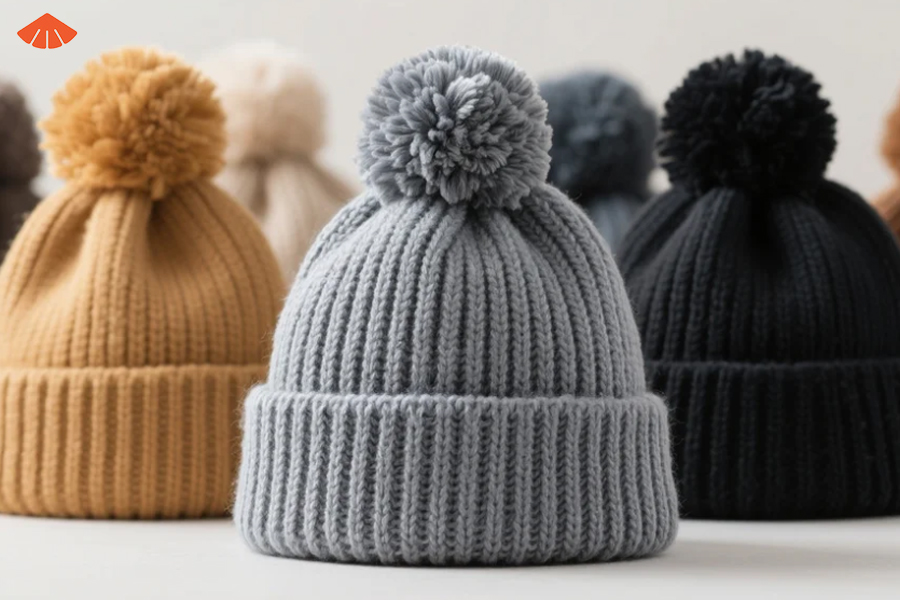
3.1 Pre-Order Quality Tests You Can Do On a Sample
Before you place a bulk order with a factory, always request 2-3 samples to test. You don’t need fancy lab equipment to check for shape retention—these simple at-home tests will tell you everything you need to know.
Run these 5 tests on every mens chunky knit beanie or women’s style sample:
Stretch test: Pull the cuff and the body of the hat firmly for 10 seconds, then let go. A high-quality hat will snap back to its original size almost immediately. If it stays stretched out, pass on it.
Light test: Hold the hat up to a bright light. If you can see lots of gaps between stitches, the knitting tension is too loose and the hat will stretch out fast.
Wash test: Hand wash the sample (following the care label) and lay it flat to dry. If it shrinks more than 5% or stretches out of shape, the yarn quality is poor.
Weight test: Weigh the hat on a small scale. A high-quality
thick cable knit hatshould weigh 120-180g (for adult size). Anything lighter is likely using thin, low-quality yarn.
Pom pom test: Shake the hat vigorously for 30 seconds. If the pom pom feels loose or pulls on the crown, the attachment is not secure enough for long-term wear.
For faux fur pom pom hat wholesalers, doing these tests upfront can save you from dealing with hundreds of customer complaints down the line. It’s also a good idea to keep a “control sample” of each style you sell, so you can compare bulk orders to the original approved sample.
If you’re sourcing custom hats with custom logo&color, make sure the embroidery or printing doesn’t stretch or warp the fabric of the hat. Cheap embroidery can pull on the knit, creating distortion around the logo area.
3.2 How to Vet Factories for Consistent Shape Retention
Not all knit hat factories are equal. Some specialize in fast-fashion, low-cost options, while others focus on premium, long-lasting quality. For B2B buyers, finding the right factory partner is half the battle.
In 2026, there are 3 key questions to ask every potential factory supplier:
What is your standard fiber blend for cable knit beanies? (Look for a wool-acrylic-elastane blend, not 100% cheap acrylic)
Do you have a quality control process for knitting tension? (Look for 100% inspection of tension, not just random sampling)
Can you provide stretch recovery test data for your hats? (Reputable factories will have this data on hand)
Other factors to consider when vetting factories:
Minimum order quantities (MOQs) that fit your business size
Lead times that align with your winter sales timeline
Ability to offer custom sizing beyond the standard 54-58cm
Experience working with brands in your niche (e.g., outdoor gear, fashion apparel)
For startup founders and small business owners, it can be tempting to go with the cheapest supplier you find on Alibaba. But in the long run, paying 10-15% more per unit for better quality will save you money in returns and bad reviews.
If you’re a knit beanie importer, consider working with a third-party inspection company to check bulk orders before they ship. A 2-3% inspection fee is a small price to pay for peace of mind.
4. Care & Marketing Tips to Reduce Returns & Boost Customer Satisfaction
Even the highest-quality cozy thick cable knit cuffed faux fur pom pom beane hat will stretch out if customers don’t care for it properly. As a seller, you can reduce returns and build customer loyalty by educating your customers on proper beanie care.
In 2026, 72% of consumers say they’re more likely to buy from a brand that provides clear care instructions, per the National Retail Federation. Care guides are a low-effort way to add value and reduce unnecessary returns.
Let’s cover care tips first, then marketing strategies to highlight your beanies’ quality.
4.1 Customer Care Guide to Keep Beanies Shaped Perfectly
Many customers throw their beanies in the washing machine with the rest of their laundry, which is a surefire way to stretch them out. By sharing simple care instructions, you can help your customers get years of use out of their hats.
Share these 5 care tips with your customers:
Hand wash only in cold water with mild detergent. Machine washing agitates the knit fibers and causes stretching.
Don’t wring out the hat after washing. Gently squeeze out excess water, then reshape the hat while it’s damp.
Lay flat to dry on a clean towel. Hanging a wet beanie will stretch it out from the weight of the water.
Store it folded, not stretched over a hook or hanger. Hanging a beanie for long periods pulls the fabric out of shape.
Fluff the pom pom by hand after washing. If it gets matted, gently brush it with a soft-bristled brush to restore fluffiness.
For an oversized faux fur pom pom cable knit beanie, it’s especially important to remind customers to remove the pom pom before washing if it’s detachable. This protects both the pom pom and the hat crown from damage.
You can include these care tips on a small card inside each hat package, or post a short video guide on your social media channels. It’s a small touch that makes a big difference in customer satisfaction.
If you sell windproof thermal chunky knit cuffed snow hat styles for outdoor use, add an extra tip about cleaning after exposure to snow or salt. Salt from roads or ski slopes can damage knit fibers over time, so rinsing the hat gently after outdoor use is recommended.
4.2 Marketing Angles to Highlight Shape Retention Quality
In a crowded market, shape retention is a unique selling point that can set your beanies apart from the competition. Most brands only talk about softness and warmth—talking about long-lasting shape helps you stand out.
Try these marketing angles for your 2026 winter collection:
“Won’t go limp after 1 week”: Address the common customer pain point head-on in your product descriptions and ad copy.
30-day shape guarantee: Offer a money-back guarantee if the hat stretches out within 30 days. This builds trust and reduces purchase hesitation.
Before/after photos: Show photos of your beanie next to a cheap competitor’s beanie after 1 month of wear. Visual proof is very persuasive.
Material breakdown infographics: Explain why your wool-acrylic-elastane blend is better than cheap 100% acrylic. Educating customers makes them more willing to pay a premium.
For womens cable knit pom pom hat lines, focus on style retention too: emphasize that the hat will keep its cute, slouchy shape all winter long, not just the first day.
For mens chunky knit beanie lines, focus on durability and performance: highlight that the hat will stay snug during outdoor activities like skiing, hiking, or commuting in cold weather.
Winter hat wholesale distributors can also use these selling points to attract retail clients. If you can prove your beanies have a 20% lower return rate than competitors, retailers will be more likely to stock your products.
If you offer custom logo&color services, highlight that your high-quality base hats make custom logos look better for longer. A stretched-out hat with a warped logo reflects poorly on both your brand and your client’s brand.
By focusing on quality and transparency, you can build a loyal customer base that comes back year after year for winter accessories.
Interested in custom cap solutions? Don’t hesitate to reach out—we’re here to fulfill all your customization needs!
Follow & Message Us:
Facebook:https://www.facebook.com/fitwell.li
Instagram: www.instagram.com/fitwellcustomhats.dds/
LinkedIn:http://www.linkedin.com/in/fitwellcustom-hats-38a2b9b0/
Pinterest: http://www.pinterest.com/FitwellCustomHatsdds/
YouTube: http://www.youtube.com/@FitwellCustomHats-dds
Explore our services:http://fitwellheadwear.en.alibaba.com
WhatsApp us now: https://psce.pw/86jwa3