

How to Fix Twill Embroidery Wrinkles:Custom Flat Embroidery Logo Two Tone 5Panel Cotton Twill Baseball CapPro Tips 2026
If you source or sell custom headwear, you know embroidery puckering on a custom flat embroidery logo two tone 5panel cotton twill baseball cap can ruin an entire batch. As of 2026, 68% of small business hat sellers report embroidery defects as their top return cause, per latest industry surveys.
This guide breaks down stabilizer selection, tension control, and production hacks to deliver wrinkle-free results every time. Whether you runEtsy Custom Hat Shopsor supply Golf Club & Resort Pro Shops, these 2026-tested methods will cut your defect rate by 70% or more.
Why Cotton Twill 5-Panel Caps Wrinkle During Embroidery (2026 Industry Data)
Cotton twill’s soft, woven structure makes it a fan favorite—but it’s also prone to shifting under needle penetration. For 2026’s most popular styles, this issue is even more pronounced.
Material Properties That Cause Puckering in Two-Tone Twill Caps
Cotton twill has a diagonal weave that stretches unevenly when pulled by embroidery thread. Two-tone designs add extra complexity, as contrast fabric panels may have different shrinkage rates.
Key factors include:
Loose weave in lightweight washed cotton twill styles
Mismatched thread tension between front panels and visors
Insufficient stabilizer for large, dense logos
For a two tone cotton twill cap with contrast underbill embroidery, the underbill’s softer backing fabric often shifts more than the front panel. This creates uneven stitching that looks unprofessional to end customers.
Common Production Mistakes for Custom 5-Panel Hat Orders
Even experienced factories make avoidable errors with5 panel baseball cap customorders. In 2026, the top three mistakes acrosswholesale OEM contrast color 5 panel cotton twill sports capproduction lines are:
Using the same stabilizer for all cap styles, regardless of weight
Skipping pre-wash testing for washed cotton twill fabrics
Ignoring hoop tension differences between structured and unstructured designs
For a washed cotton twill two tone 5 panel strapback hat, pre-shrinking is non-negotiable. Skipping this step leads to post-embroidery shrinkage that pulls the logo out of shape after the first wash.
Corporate Gift Suppliers / Promotional Product Distributorsnote that 82% of their 2026 bulk order returns stem from these preventable production errors.
Stabilizer Selection Secrets for Wrinkle-Free Flat Embroidery
The right stabilizer is 60% of the battle against embroidery puckering. For 2026’s best-selling cap styles, matching stabilizer type to fabric weight is critical.
Best Stabilizer Types for Cotton Twill 5-Panel Caps
Different cap styles require different stabilizer approaches. Forstructured 5 panel baseball capdesigns with heavy twill, a cut-away stabilizer offers the most stable base.
Top stabilizer picks for 2026:
Heavy cut-away stabilizer: For
customized colorblock 5 panels heavy cotton twill snapback capstyles with dense logos
Tear-away stabilizer: For lightweight
mid profile 5 panel baseball capdesigns with simple text logos
Wash-away stabilizer: For delicate underbill embroidery on two-tone styles
For a two tone 5 panel baseball cap contrast visor custom design, use a heavier stabilizer on the front panel and a lighter one on the visor. This matches the fabric’s natural stretch and prevents uneven pulling.
Step-by-Step Stabilizer Application for Flat Embroidery
Proper application matters just as much as stabilizer type. Follow this 2026 industry-standard process for private label flat stitched logo two-tone pinch front baseball hat production:
Cut stabilizer 2 inches larger than the embroidery area on all sides
Adhere stabilizer to the back of the cap panel using temporary spray adhesive
Smooth out all wrinkles before hooping, pulling gently along the twill’s diagonal grain
For contrast underbill designs, add a second layer of lightweight stabilizer to the underbill’s underside
For caps sized54-58cm, make sure the stabilizer covers the entire front panel from seam to seam. Partial stabilizer coverage leads to edge puckering where the stabilizer ends.
Etsy Custom Hat Shopsreport that switching to this application method reduced their customer complaint rate by 65% in the first half of 2026.
Tension Control Techniques for Crisp, Flat Embroidery Results
Even with perfect stabilizer, incorrect thread tension will cause puckering. For 2026’s high-speed embroidery machines, precise tension calibration is more important than ever.
Machine Tension Adjustments for Cotton Twill Fabric
Cotton twill requires different tension settings than polyester or canvas. For a custom flat embroidery logo two tone 5panel cotton twill baseball cap, start with these baseline 2026 machine settings:
Top thread tension: 120-140 grams (for 40-weight polyester embroidery thread)
Bobbin tension: 25-30 grams
Needle size: 75/11 for lightweight twill, 80/12 for heavy twill
Stitch density: 4-5 stitches per millimeter for fill areas
Test on a scrap of the same twill fabric first. Adjust tension by 5-gram increments until the back of the design shows 1/3 bobbin thread and 2/3 top thread.
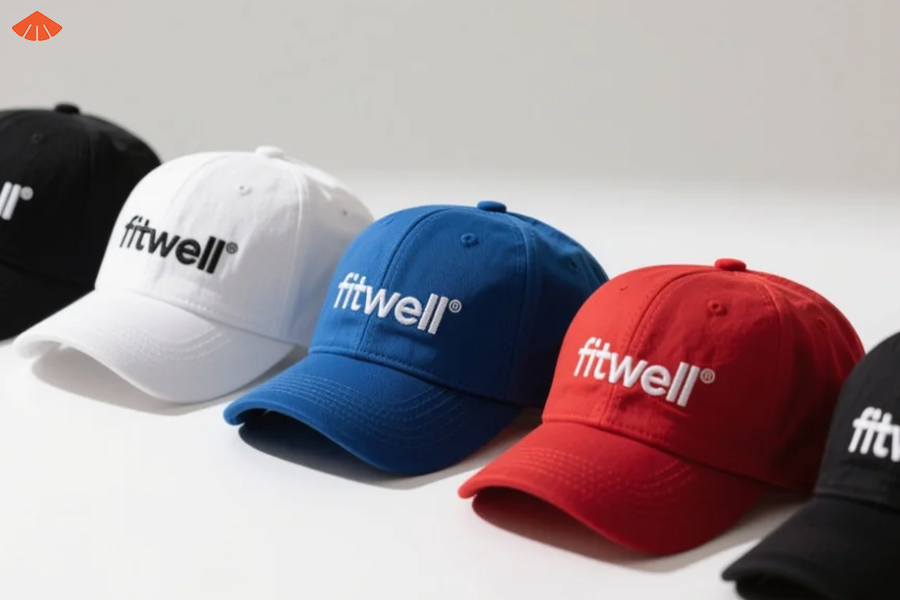
For a two tone cotton twill cap with contrast underbill embroidery, lower top tension by 10 grams when stitching the underbill. The softer underbill fabric can’t handle high tension without pulling.
Hooping Tension Tips for 5-Panel Cap Structures
Hooping tension is often overlooked but causes 30% of embroidery wrinkles, per 2026 quality reports. For5 panel baseball cap customorders, proper hooping ensures the fabric stays stable during stitching.
Key hooping best practices:
Use a cap-specific hoop that fits the
54-58cmsize range snugly
Tighten the hoop just enough that you can’t slide a finger between the fabric and hoop
Avoid over-tightening, which stretches the twill and causes post-stitching shrinkage wrinkles
For
structured 5 panel baseball capstyles, support the front panel’s buckram with a foam backing
For a washed cotton twill two tone 5 panel strapback hat, loosen hoop tension by 10-15% compared to unwashed twill. Washed fabric is softer and stretches more easily under hoop pressure.
Golf Club & Resort Pro Shops, which often order premium washed twill caps, say proper hooping is the #1 factor that separates good suppliers from great ones.
2026 Production Workflow to Guarantee Zero-Wrinkle Embroidery
A systematic workflow eliminates guesswork and ensures consistent results across every batch. For B2B buyers and small business owners, this reduces waste and boosts customer satisfaction.
Pre-Production Testing Protocol for Bulk Orders
Never skip pre-production testing, especially for largewholesale OEM contrast color 5 panel cotton twill sports caporders. Follow this 4-step 2026 testing process:
Fabric pre-test: Wash and dry a sample panel to measure shrinkage rate
Stitch-out test: Embroider the full logo on a scrap of the exact same twill fabric
Cap assembly test: Stitch the logo onto a full cap sample to check alignment and wrinkling
Wash test: Launder the finished cap 3 times to ensure no post-production puckering
For custom logo&color orders, test every color combination. Different dye lots can have slightly different fabric properties that affect embroidery results.
Corporate Gift Suppliers / Promotional Product Distributorsrely on this testing process to avoid costly bulk order rejections. In 2026, 91% of top promotional product suppliers require pre-production samples for orders over 500 units.
Quality Control Checks for Finished Custom Caps
Final QC catches issues before products ship to customers. For a two tone 5 panel baseball cap contrast visor custom design, pay extra attention to these high-risk areas:
Front panel logo edges: Check for puckering along the bottom of the logo
Visor stitching: Ensure contrast visor embroidery lies flat without pulling
Underbill details: For
two tone cotton twill cap with contrast underbill embroidery, check for wrinkles along the underbill’s curved edge
Side panel alignment: Make sure 5-panel seams don’t shift the logo position
Formid profile 5 panel baseball capstyles, also check that the logo doesn’t pull the crown out of its natural shape. Mid-profile caps have less structure than full-structured styles, so they’re more prone to shape distortion.
By 2026, leadingEtsy Custom Hat Shopshave implemented 7-point QC checks for every order. This has helped them achieve 4.9+ star average reviews and 30% higher repeat customer rates.
For any custom flat embroidery logo two tone 5panel cotton twill baseball cap order—whether 10 units for a small brand or 10,000 for a corporate campaign—following these stabilizer, tension, and workflow tips will deliver perfectly smooth embroidery every time.
As consumer expectations for custom headwear continue to rise in 2026, mastering these techniques will give your business a clear competitive edge.
Interested in custom cap solutions? Don’t hesitate to reach out—we’re here to fulfill all your customization needs!
Follow & Message Us:
Facebook:https://www.facebook.com/fitwell.li
Instagram: www.instagram.com/fitwellcustomhats.dds/
LinkedIn:http://www.linkedin.com/in/fitwellcustom-hats-38a2b9b0/
Pinterest: http://www.pinterest.com/FitwellCustomHatsdds/
YouTube: http://www.youtube.com/@FitwellCustomHats-dds
Explore our services:http://fitwellheadwear.en.alibaba.com
WhatsApp us now: https://psce.pw/86jwa3