

Why Fine Logos Deform onCustom 5Panel High Quality Cotton Trucker Hat Embroidered: Pattern Fixes for 2026 Production
If you sourcecustom 5panel high quality cotton trucker hat embroidereddesigns for your brand or clients, you’ve likely faced a frustrating issue: crisp, detailed logos that look perfect on digital proofs turn warped or distorted once stitched onto cotton twill fabric.
This problem isn’t a flaw in your embroidery machine—it’s a mismatch between logo design, fabric properties, and pre-production pattern settings. For custom hat trading company teams, workwear retail store buyers, and hat embroidery service provider operators, fixing these issues before mass production cuts defect rates by up to 40% per 2026 apparel manufacturing data.
In this guide, we’ll break down the root causes of logo distortion on cotton twill 5-panel hats, the exact pattern parameters to adjust, and how to deliver consistent results for every order.
1. Root Causes of Fine Logo Distortion on Cotton Twill 5-Panel Hats
Cotton twill is a durable, breathable fabric ideal for high quality trucker hat designs, but its natural properties create unique challenges for detailed embroidery. Understanding these causes is the first step to fixing pattern issues.
1.1 Fabric Shrinkage and Stretch Characteristics of Cotton Twill
Cotton twill has inherent stretch along the bias (diagonal) direction and minimal stretch along the warp and weft. When a logo is stitched without accounting for this, the fabric pulls under embroidery tension, causing fine lines to warp.
Key fabric properties that impact embroidery:
Pre-wash shrinkage rate of 3-5% for untreated cotton twill
15-20% stretch along the bias direction
Softening after dyeing, which reduces structural stability
Forcolorfast dyed cotton 5 panel trucker hat custom embroideryorders, the dyeing process can further relax fabric fibers, increasing the risk of distortion if pre-shrinking is skipped.
1.2 Mismatch Between Logo Complexity and Fabric Weight
Fine logos with small text, thin lines, or intricate details require a stable base to hold their shape. Lighter-weight cotton twill (below 8 oz) often lacks the density to support dense embroidery stitches.
Common logo design factors that increase distortion risk:
Text smaller than 6mm in height
Stitch density above 70 stitches per square cm
Large solid fill areas with no underlay
Fine outline details with less than 2 stitch lines
Foroutdoor merchandise custom 5 panel cotton trucker hat embroideryorders, logos often include detailed brand marks or event graphics. These designs need adjusted pattern settings to maintain clarity on rugged cotton twill.
2. Critical Pattern Parameters to Adjust Before Mass Production
Pattern adjustment is the most impactful step to prevent logo distortion. Every 5 panel trucker hat custom order should include a pre-production pattern review focused on these core parameters.
2.1 Logo Placement and Stabilizer Configuration
The position of your logo on the hat panel directly affects how the fabric responds to embroidery. The curved shape of a 5-panel crown creates natural tension points that can pull stitches out of alignment.
Must-adjust placement and stabilizer settings:
Logo position: 1.5-2cm below the crown seam for
mid profile 5 panel cotton snapback trucker hat with embroiderydesigns
Stabilizer type: Tear-away stabilizer for light designs, cut-away for dense logos
Stabilizer weight: 2 oz for 8 oz cotton twill, 3 oz for 6 oz lightweight twill
Hoop tension: 15-18 Nm for cotton twill to avoid over-stretching
For bulk custom trucker hats orders, standardizing stabilizer selection based on fabric weight reduces variation between production batches. A 2026 embroidery industry survey found that 62% of logo distortion issues stem from incorrect stabilizer choice.
2.2 Stitch Density and Underlay Pattern Tuning
Stitch density controls how tightly thread is packed into the logo area. Too high density pulls fabric; too low density makes the logo look faint. Underlay stitches provide a foundation that holds the fabric stable.
Key stitch and underlay parameters to calibrate:
Stitch density: 55-65 stitches per square cm for fine logos on cotton twill
Underlay type: Center walk underlay for small text, tatami underlay for fill areas
Underlay stitch length: 3-4mm for maximum stability
Pull compensation: 0.2-0.3mm adjustment for fine lines to counteract fabric pull
Forcustom 5 panel hatorders with custom logo&color requirements, pull compensation should be tested for each thread color, as different thread weights create varying tension levels.
3. Pre-Production Testing Protocols for 2026 Quality Standards
Testing is non-negotiable for consistent embroidery quality. A structured pre-production test catches 90% of potential distortion issues before full production begins.
3.1 Sample Stitching and Fabric Shrinkage Validation
Before producing full batches, create test samples using the exact fabric, thread, and stabilizer planned for the order. This step validates that your pattern adjustments work in practice.
Sample testing steps for every custom embroidered trucker hat order:
Pre-wash the cotton twill fabric to measure actual shrinkage rate
Stitch the logo on a test panel using production settings
Wash the test panel again to simulate post-purchase care
Measure logo dimensions and compare to original design files
Adjust pattern parameters if distortion exceeds 1mm tolerance
For orders requiring a54-58cmsize range, test logo placement on both the smallest and largest crown patterns. Curvature varies by size, which can change how the logo sits on the panel.
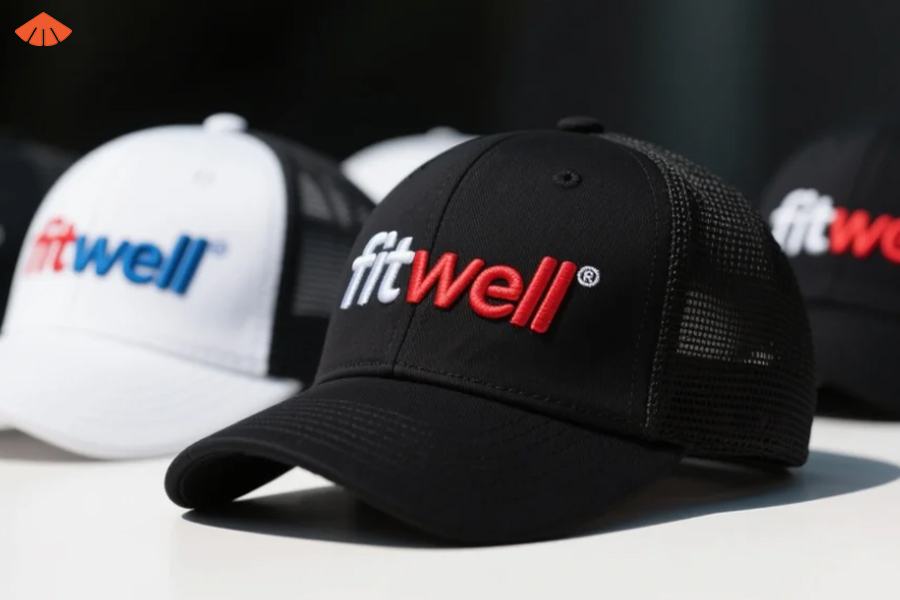
3.2 Size and Fit Calibration Across Hat Size Ranges
5-panel trucker hats come in multiple sizes, and the crown curve changes with each size. A logo that looks perfect on a medium hat may warp on an XL size if the pattern isn’t adjusted.
Size-specific pattern adjustments:
For 54-55cm sizes: Reduce logo width by 2mm to match tighter crown curve
For 57-58cm sizes: Increase underlay density by 10% to support larger flat area
For snapback styles: Align logo center with the front panel seam, not the hat center
For mid-profile designs: Shift logo down 0.5cm to avoid the crown’s sharpest curve
For workwear retail store buyers that offer hats in multiple sizes, standardizing size-specific pattern rules ensures consistent branding across the entire size range.
4. Business Impact of Correct Pattern Adjustment for B2B Buyers
Fixing embroidery pattern issues isn’t just a technical detail—it directly impacts your bottom line, customer satisfaction, and brand reputation in the 2026 market.
4.1 Defect Rate Reduction and Cost Savings for Bulk Orders
Defective hats eat into profit margins, especially for bulk custom trucker hats orders. Pattern adjustment reduces waste, rework time, and customer returns.
Quantifiable benefits of proper pattern calibration:
35-45% reduction in embroidery defect rates
20-30% less fabric and thread waste per production run
15% faster production time from reduced rework
25% lower return and refund rates from B2B clients
For custom hat trading company teams, these savings directly improve per-order margins. A 2026 apparel sourcing report found that suppliers with pre-production pattern review services charge 10-15% premium rates due to higher quality consistency.
4.2 Brand Consistency for Retail and Merchandise Clients
For brands selling hats directly to consumers, consistent logo quality builds trust and recognition. Distorted logos make products look cheap, even if the hat itself is high quality.
How pattern adjustment improves brand value:
Crisp, professional logos that match digital brand guidelines
Consistent appearance across different hat sizes and styles
Durable embroidery that holds shape after repeated washes
Premium perceived value that supports higher price points
For hat embroidery service provider businesses, offering pattern correction as a value-added service differentiates you from low-cost competitors. Clients will pay more for guaranteed quality that protects their brand image.
By prioritizing pattern adjustment before mass production, you’ll delivercustom 5panel high quality cotton trucker hat embroideredproducts that meet 2026 quality standards, reduce costs, and keep your clients coming back for repeat orders.
Interested in custom cap solutions? Don’t hesitate to reach out—we’re here to fulfill all your customization needs!
Follow & Message Us:
Facebook:https://www.facebook.com/fitwell.li
Instagram: www.instagram.com/fitwellcustomhats.dds/
LinkedIn:http://www.linkedin.com/in/fitwellcustom-hats-38a2b9b0/
Pinterest: http://www.pinterest.com/FitwellCustomHatsdds/
YouTube: http://www.youtube.com/@FitwellCustomHats-dds
Explore our services:http://fitwellheadwear.en.alibaba.com
WhatsApp us now: https://psce.pw/86jwa3