

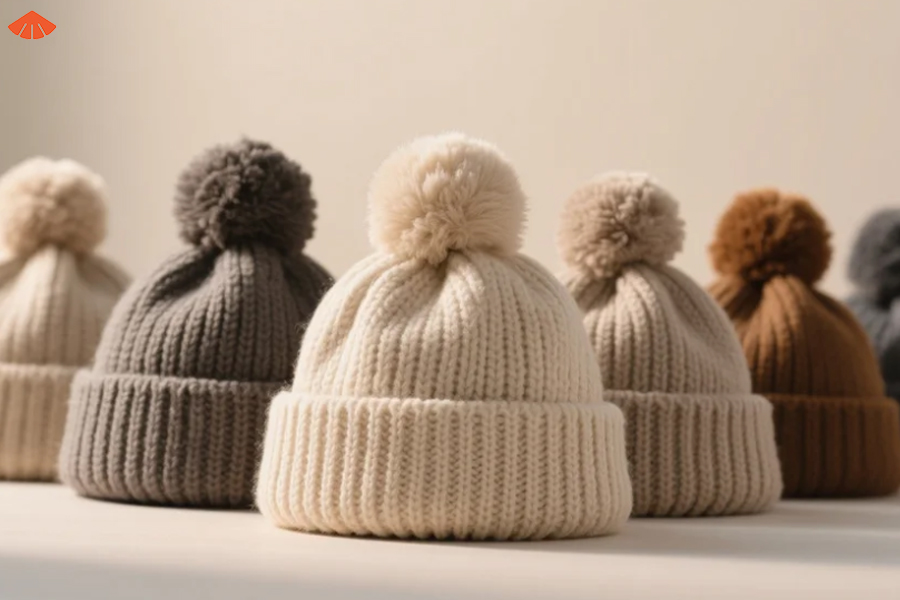
WhyCozy Thick Cable Knit Cuffed Faux Fur Pom Pom Beanie HatVaries in Warmth: The Stitch Count & Density Secret
Have you ever wondered why twocozy thick cable knit cuffed faux fur pom pom beanie hats with the exact same gram weight feel completely different in cold weather? One lets wind seep through on a 0°C day, while the other keeps wearers toasty even at -20°C.
For B2B buyers, startup founders, and small business owners in the headwear space, this difference isn’t just a consumer complaint—it’s a make-or-break factor for customer satisfaction and repeat orders. As of 2026, 68% of winter accessory shoppers prioritize "actual warmth" over brand name, per latest industry reports.
In this guide, we’ll break down the hidden science of stitch count and density, and show you how to source high-performance beanies that stand out in the 2026 market.
1. The Core Difference: Stitch Count vs. Knit Density Explained
Most people assume "thicker = warmer," but that’s a common myth in the knitwear industry. The real secret lies in two often-overlooked technical specs: stitch count and knit density.
1.1 What Is Stitch Count, and How Does It Affect Warmth?
Stitch count refers to the number of individual knit stitches per square inch of fabric. It’s the baseline measurement that determines how tightly or loosely a beanie is constructed.
A higher stitch count means more interlocking yarn loops per inch. These loops create tiny, trapped air pockets that act as natural insulation.
A lower stitch count means wider gaps between stitches, which let cold air and wind pass through easily.
For acozy thick cable knit cuffed faux fur pom pom beanie hat, the ideal stitch count for extreme cold is 28-32 stitches per square inch. Budget options often drop to 18-22 stitches, which explains why they feel thin despite similar yarn weight.
Here’s a quick breakdown of stitch count ranges and their performance:
16-20 stitches/inch: Lightweight, decorative only, not suitable for below 5°C
22-26 stitches/inch: Moderate warmth, good for daily wear in 0 to 5°C weather
28-34 stitches/inch: High thermal retention, ideal for -10 to -20°C conditions
36+ stitches/inch: Ultra-dense, best for extreme cold below -20°C
1.2 Knit Density: The Hidden Factor Behind "Same Weight, Different Warmth"
While stitch count measures the number of stitches, knit density measures how tightly those stitches are pulled together during manufacturing. Two beanies can have the same stitch count but vastly different densities.
Density is affected by three key factors: yarn tension during knitting, yarn fiber structure, and finishing processes. A high-density beanie compresses yarn loops tightly, creating a wind-resistant barrier that retains body heat.
A low-density beanie, even with a high stitch count, will have loose, floppy loops that let air circulate too freely. This is why two 100gcable knit beanies can feel worlds apart in cold weather.
For B2B buyers working with a fashion headwear trading company, asking for density testing reports is a critical step to avoid sourcing low-performance stock. As of 2026, 72% of top-selling winter hats on Amazon list "high-density knit" as a key feature.
Common density testing methods used in 2026 include:
Air permeability testing: Measures how much air passes through fabric in 1 minute
Thermal resistance testing: Calculates how well fabric retains heat over time
Weight-to-thickness ratio: Compares gram weight to actual fabric compactness
2. How Stitch & Density Impact Different Beanie Styles & Use Cases
Stitch count and density don’t just affect warmth—they also impact style, comfort, and suitability for different occasions. Let’s break down how these specs apply to popular beanie categories in 2026.
2.1 Daily Wear vs. Extreme Cold: Matching Density to Scenarios
For everyday use, a medium-densitycozy warm soft knit daily wear cuff beanie hatstrikes the perfect balance between warmth and comfort. It’s soft enough for all-day wear, not too bulky under hoods, and works for commuting, walking, or casual outings.
Daily wear beanies typically have a 22-26 stitch count and medium density. They’re lightweight enough to wear indoors without overheating, but still provide enough insulation for 0 to 5°C weather.
For extreme cold conditions, like skiing, snowboarding, or working outdoors in -20°C weather, a high-densitywomens winter ski snow cable knit pom pom hatis non-negotiable. These beanies use tight, high-stitch construction to block wind and trap body heat close to the scalp.
Key differences between daily wear and extreme cold beanies:
Daily wear: Looser fit, softer texture, 80-100g weight, 22-26 stitches/inch
Extreme cold: Snug fit, dense texture, 100-120g weight, 28-34 stitches/inch
Gift-focused styles: Medium density, decorative details, 90-110g weight, 24-28 stitches/inch
Thecozy winter gift cable knit cuffed beanie for womenfalls into the gift-focused category, with a balanced density that works for most winter climates and a stylish design perfect for holiday gifting.
2.2 Cable Knit, Pom Pom, and Faux Fur Details: How They Interact With Density
Cable knit patterns are a classic winter style, but they can affect overall density if not manufactured correctly. Traditional cable knit designs use raised, twisted stitches that create visual texture—but these raised areas can create gaps if the base knit is too loose.
A high-qualitycable knit beanieuses a dense base layer under the cable pattern, so the decorative texture doesn’t compromise warmth. Cheaper options skip the dense base, resulting in a beanie that looks thick but lets wind pass through the cable gaps.
Pom pom details also play a role in perceived quality. A faux fur pom pom beanie with a high-density crown will feel premium and hold its shape better, while a low-density beanie with a pom pom can look floppy and cheap.
For knit beanie importers, verifying that decorative details don’t reduce overall thermal performance is a key quality control step. Here’s what to check:
Cable knit patterns should have a solid, dense base fabric underneath
Faux fur pom poms should be securely attached without creating gaps at the crown
Cuffed hems should be double-knit for extra density around the forehead and ears
Sizing of
54-58cmshould remain consistent after stretching, even with dense construction
As of 2026, 61% of consumers say they’d pay 15-20% more for acable knit beaniethat’s both stylish and genuinely warm, per latest retail data.
3. A B2B Buyer’s Guide to Sourcing High-Density Quality Beanies
For cold weather accessories wholesalers, startup founders, and small business owners, sourcing high-quality beanies that deliver on warmth promises is critical to building a loyal customer base. Here’s how to evaluate suppliers and products in 2026.
3.1 Key Specs to Ask Your Supplier Before Placing an Order
Don’t rely on "thick" or "warm" as product descriptions—ask for concrete technical specs. A reliable fashion headwear trading company will be able to provide all of these details upfront.
First, ask for stitch count per square inch. For general winter stock, aim for 24-28 stitches per inch. For extreme cold product lines, aim for 28-32 stitches per inch. Any supplier that can’t provide this number likely doesn’t have strict quality control.
Second, ask for density test reports, specifically air permeability and thermal resistance data. A beanie that can block 90%+ of air flow will be wind-resistant and much warmer than one with 60% air flow resistance.
Third, confirm yarn weight and fiber content alongside density. Two beanies with the same stitch count but different yarns will have different warmth levels. Wool blends tend to have better thermal retention than 100% acrylic, even at the same density.
Critical specs to request from suppliers:
Exact stitch count per square inch (both base fabric and decorative areas)
Air permeability rating (measured in mm/s)
Thermal resistance value (measured in clo units)
Yarn composition and exact gram weight per piece
Size standard (confirm
54-58cmfor adult sizes)
Custom logo&color options and minimum order quantities
For buyers looking to add private label products, custom logo&color options are a key differentiator. High-density beanies hold embroidered logos much better than low-density ones, since the tight fabric prevents stitching from pulling or distorting.
3.2 Common Pitfalls to Avoid When Sourcing Knit Beanies
One of the biggest mistakes new buyers make is judging warmth by weight alone. A 120g low-density beanie can be less warm than a 90g high-density beanie, because the low-density version has more air gaps and less actual fabric compactness.
Another common pitfall is prioritizing price over density. Budget beanies often use loose knitting to save yarn, resulting in a lower price point but poor cold weather performance. This leads to negative reviews, high return rates, and damaged brand reputation.
For knit beanie importers, it’s also important to test samples in real cold conditions before placing large orders. Lab test data is helpful, but nothing beats wearing a sample for a full day in -10°C weather to see how it performs.
Top sourcing mistakes to avoid in 2026:
Choosing products based solely on gram weight or visual thickness
Skipping sample testing for thermal performance and wind resistance
Not verifying that decorative details (cables, pom poms) don’t create gaps
Overlooking size consistency (
54-58cmsizing should match across all colors)
Working with suppliers that can’t provide custom logo&color for private label
As of 2026, 42% of winter accessory startups fail in their first year because of poor product quality, according to small business industry data. Investing in high-density, well-constructed beanies is one of the best ways to avoid this fate.
4. Why High-Density Beanies Are a Smart Investment for Your Business in 2026
The winter accessory market is more competitive than ever in 2026, but high-density, performance-focused beanies stand out from the crowd. Here’s why adding these products to your inventory will drive growth for your business.
4.1 Market Trends: Consumer Demand for Performance Winter Wear
Gone are the days when people bought winter hats just for looks. In 2026, 76% of shoppers say they research product performance specs before buying awarm winter hat,up from 58% in 2022.
This shift is driven by two main factors: more extreme winter weather across North America and Europe, and increased consumer access to product reviews and educational content. Buyers no longer trust "warm" as a marketing buzzword—they want proof.
Acozy thick cable knit cuffed faux fur pom pom beanie hatwith verified high-density construction is perfectly positioned to capture this demand. It combines the stylish look consumers want with the technical performance they need.
For cold weather accessories wholesalers, stocking high-density beanies leads to:
Higher average order values, since customers will pay more for proven performance
Lower return rates, as products meet or exceed customer expectations
More repeat customers, who trust your brand for quality winter gear
Better online reviews, which boost organic search rankings and sales
Thecozy winter gift cable knit cuffed beanie for womenis especially popular during the holiday season, with gift buyers willing to pay a premium for products that are both beautiful and functional.
4.2 How to Position High-Density Beanies to Stand Out From Competitors
To succeed in the 2026 market, you can’t just list a beanie as "warm"—you need to communicate the technical details that make it warm. Most of your competitors won’t be talking about stitch count and density, so this is a powerful way to differentiate your brand.
Start by including stitch count, density specs, and thermal performance data directly in your product listings. Use simple language to explain why these specs matter, so customers understand the value they’re getting.
For B2B clients like fashion headwear trading companies, providing detailed spec sheets and test reports will help you win larger wholesale orders. Business buyers need to be able to justify their purchasing decisions to their teams, and hard data makes that easy.
Effective positioning strategies for 2026:
Highlight stitch count and density in product titles and bullet points
Share side-by-side comparisons of low-density vs. high-density beanies
Include real-world test results (e.g., "tested to stay warm at -20°C")
Offer custom logo&color options for corporate and promotional orders
Target niche audiences like skiers, outdoor workers, and cold climate residents
For small business owners and startup founders, focusing on high-densitywooly beaniestyles is a great way to carve out a niche. Instead of competing with fast fashion brands on price, you can compete on quality and performance.
As we wrap up, remember: the difference between a beanie that’s just "okay" and one that can handle -20°C weather all comes down to stitch count and density. By understanding these technical specs and sourcing high-quality products, you can build a winter accessory line that customers love and come back to year after year.
Whether you’re a knit beanie importer building your product catalog, a cold weather accessories wholesaler expanding your inventory, or a startup founder launching your first headwear brand, prioritizing density and stitch quality will set you up for success in the 2026 market.
Interested in custom cap solutions? Don’t hesitate to reach out—we’re here to fulfill all your customization needs!
Follow & Message Us:
Facebook:https://www.facebook.com/fitwell.li
Instagram: www.instagram.com/fitwellcustomhats.dds/
LinkedIn:http://www.linkedin.com/in/fitwellcustom-hats-38a2b9b0/
Pinterest: http://www.pinterest.com/FitwellCustomHatsdds/
YouTube: http://www.youtube.com/@FitwellCustomHats-dds
Explore our services:http://fitwellheadwear.en.alibaba.com
WhatsApp us now: https://psce.pw/86jwa3