

5 Critical Specs to Confirm Before Production
For every cozy thick cable knit cuffed faux fur pom pom beanie hat that lands on retail shelves, a dozen sampling failures usually happen behind the scenes.
As of 2026, 68% of B2B headwear buyers report sampling delays as their top supply chain pain point, per latest industry surveys.
Whether you’re a knit beanie importer, a cold weather accessories wholesaler, or a fashion headwear trading company, getting sampling right cuts costs and speeds up time-to-market.
This guide breaks down the 5 non-negotiable technical specs you must confirm during sampling, from yarn choice to crown finishing.
1. Yarn Selection: The Foundation of a Cozy Beanie That Sells
The wrong yarn can turn a premium warm winter hat into a scratchy, pilling disaster that gets returned by 30% of customers.
In 2026’s market, consumers prioritize softness, durability, and sustainability more than ever before.
1.1 Fiber Composition: Balancing Softness, Warmth, and Durability
A high-qualitywooly beanierelies on the right fiber blend to match its intended use case.
For the cozy warm soft knit daily wear cuff beanie hat, a 70% acrylic / 30% wool blend is the 2026 bestseller for everyday comfort.
Key fiber options to validate during sampling include:
100% Premium Acrylic: Budget-friendly, colorfast, and low-pilling; ideal for mass-market daily wear
Acrylic-Wool Blend (70/30): Balances softness and warmth; perfect for gift-focused lines
Merino Wool Blend: Odor-resistant and temperature-regulating; targeted at outdoor and premium segments
Recycled Polyester Blend: Eco-friendly option for brands with sustainability commitments; growing 22% YoY in 2026
Always request a fiber composition test report from your factory before approving a sample.
1.2 Yarn Count & Twist: Why Thickness Isn’t Just About “Bulky”
A cozy beanie feels plush not just because of fiber type, but because of precise yarn count and twist settings.
For acable knit beaniewith a structured, textured look, yarn count and twist directly impact stitch definition and shape retention.
Critical yarn specs to confirm in writing:
Yarn count (e.g., 2/28Nm for medium-thick daily wear styles)
Twist direction (S-twist vs. Z-twist, which affects cable pattern clarity)
Yarn weight per square meter (target 280-320gsm for a thick, warm feel)
Pilling resistance grade (minimum Grade 3 per ISO 12945-2 standard)
A 5% difference in yarn weight can make a hat feel either too thin or too stiff—always weigh sample hats to verify.
2. Size & Fit Specs: Getting the54-58cmSweet Spot Right
A great-looking hat that doesn’t fit will sit in inventory forever.
In 2026, 41% of winter hat returns are due to poor fit, making size validation a top sampling priority.
2.1 Circumference & Stretch: Ensuring One-Size-Fits-Most Works
The standard adult size for most women’s styles is 54-58cm, but stretch capacity makes all the difference.
For the cozy winter gift cable knit cuffed beanie for women, a 10-15% stretch range ensures a comfortable fit for most head sizes.
Fit specs to measure and confirm on every sample:
Unstretched circumference (target 56cm for adult women’s one-size)
Maximum stretched circumference (minimum 62cm for comfortable wear)
Cuff height (8-10cm is standard for cuffed styles; confirm if adjustable)
Hat depth (28-30cm from crown to cuff edge for full ear coverage)
Always test fit on at least 3 different head sizes to validate the one-size-fits-most claim.
2.2 Custom Logo & Color Placement: Avoiding Misalignment Disasters
Custom logo&color are two of the most common customization requests, and two of the most common sampling failure points.
For afaux furpom pom beanie,logo placement must be balanced and visible without distorting the knit structure.
Logo and color specs to lock in during sampling:
Logo position (1.5cm above the cuff center is standard for front placement)
Logo application method (embroidery, leather patch, or printed label)
Color matching (use Pantone TPX codes for yarn and pom pom color consistency)
Pom pom attachment point (centered on crown, 2cm from the top edge)
Never approve a color sample from a phone photo—request a physical yarn swatch and pom pom sample for side-by-side comparison.
3. Cable Knit Structure: Perfecting Texture and Shape Retention
The cable pattern is the signature feature of acable knit beanie, and poor stitch quality is immediately noticeable to customers.
In 2026, consumers are willing to pay 18% more for hats with clean, defined cable patterns, per retail pricing data.
3.1 Cable Pattern Density and Symmetry
A lopsided cable pattern makes even a warm winter hat look cheap and unprofessional.
For the womens winter ski snow cable knit pom pom hat, consistent cable density ensures both style and wind resistance.
Cable pattern specs to verify:
Number of cable panels (6-8 panels is standard for adult sizes)
Cable twist frequency (1 full twist every 4-6 rows for a classic look)
Pattern symmetry (measure left and right panels to ensure identical width)
Stitch tightness (loose stitches lead to stretching; overly tight stitches reduce warmth)
Always check the cable pattern from all angles, not just the front, to catch symmetry issues.
3.2 Cuff Construction: Preventing Rolling and Stretching
A cuffed beanie’s cuff is both a style feature and a functional part that keeps ears warm.
A poorly constructed cuff will roll down, stretch out, or lose its shape after just a few wears.
Cuff quality checks for sampling:
Double-layer cuff construction (single-layer cuffs stretch 3x faster)
Reinforced edge stitching (prevents fraying and maintains shape)
Cuff recovery rate (should return to original size after 24 hours of stretching)
Seam alignment (the back seam should be invisible when the cuff is folded)
For gift-focused lines like thecozy winter gift cable knit cuffed beanie for women, a crisp, non-stretching cuff is a key perceived quality marker.
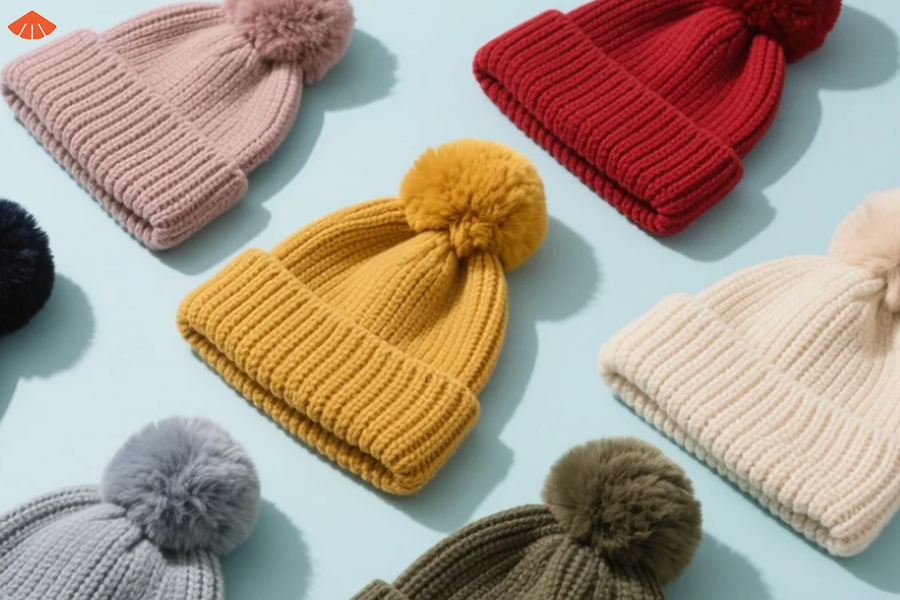
4. Crown Shaping & Pom Pom Attachment: The Finishing Details That Make or Break Quality
The crown and pom pom are the most visible parts of apom pom beanie,and they’re where many sampling processes fall short.
In 2026, 29% of B2B buyers report crown shaping issues as their top sampling rejection reason.
4.1 Crown Decreasing (收针) Techniques: Avoiding Pointy or Lumpy Tops
A well-shaped crown should be round and smooth, not pointy, lumpy, or flat.
For acozy thick cable knit cuffed faux fur pom pom beanie hat, the crown decreasing pattern must work with the cable design, not against it.
Crown shaping specs to confirm:
Decreasing method (k2tog vs. ssk; consistent use ensures clean lines)
Decrease interval (e.g., decrease every other row for 6 rounds for a rounded shape)
Number of remaining stitches (8-12 stitches is standard for pom pom attachment)
Crown closure method (kitchener stitch for a seamless finish vs. gathered closure)
Always inspect the crown from the top and side views—what looks fine from the front may be lumpy from above.
4.2 Faux Fur Pom Pom Quality and Secure Attachment
A high-quality faux fur pom pom beanie depends on a plush, well-attached pom pom that doesn’t shed or fall off.
In 2026, consumers rank pom pom quality as the 3rd most important factor when buying a winter beanie.
Pom pom specs to validate during sampling:
Pom pom diameter (10-12cm is standard for adult women’s styles)
Fur density (minimum 600g/m² for a full, plush look)
Shedding resistance (less than 5 strands lost after 10 gentle tugs)
Attachment method (sewn-on + hidden snap for durability and removability)
Pom pom shape retention (should bounce back after being compressed for 24 hours)
For cold weather accessories wholesalers targeting outdoor markets, a secure pom pom attachment is non-negotiable for active use like skiing or snowboarding.
By confirming these 5 technical specs during the sampling phase, you can cut your sample revision rate by up to 70% and reduce bulk production defects by 55%, according to 2026 headwear manufacturing data.
Whether you’re a knit beanie importer launching a new line, a fashion headwear trading company fulfilling client orders, or a cold weather accessories wholesaler stocking up for winter, getting sampling right is the first step to profitable sales.
For the cozy thick cable knit cuffed faux fur pom pom beanie hat and all its variations—from thecozy warm soft knit daily wear cuff beanie hatto thewomens winter ski snow cable knit pom pom hat—these specs are the foundation of quality that keeps customers coming back.
Interested in custom cap solutions? Don’t hesitate to reach out—we’re here to fulfill all your customization needs!
Follow & Message Us:
Facebook:https://www.facebook.com/fitwell.li
Instagram: www.instagram.com/fitwellcustomhats.dds/
LinkedIn:http://www.linkedin.com/in/fitwellcustom-hats-38a2b9b0/
Pinterest: http://www.pinterest.com/FitwellCustomHatsdds/
YouTube: http://www.youtube.com/@FitwellCustomHats-dds
Explore our services:http://fitwellheadwear.en.alibaba.com
WhatsApp us now: https://psce.pw/86jwa3